

Brothers served in same military unit during Vietnam War

During the Vietnam War, it was rare to see two members of the same immediate family serving in the same unit while “in country.”
“There were a lot of brothers out there,” said Ernie Gerhardt of rural Netawaka. “Usually, if one brother got orders to go, the other one never got orders.”
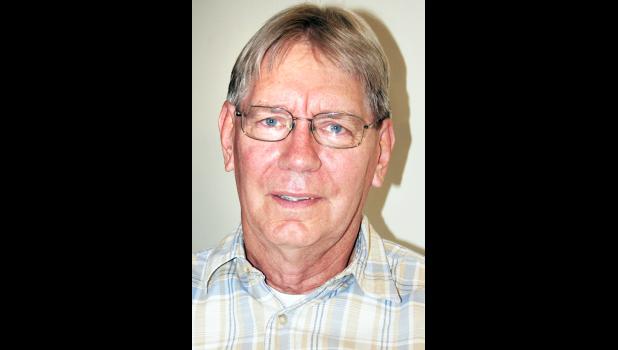
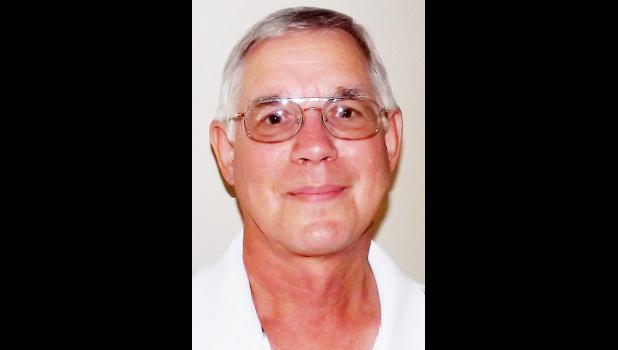
But for 11 months in 1969, Ernie and his younger brother, Jim, were part of the same National Guard unit, serving in a “fire direction center” in southern Vietnam. Ernie, a 1964 graduate of Netawaka Rural High School, was a staff sergeant, while Jim, a 1966 graduate, was a fire direction chief.
Their time in Vietnam was not long — both landed back at home in northern Jackson County on the day after Thanksgiving in 1969 — nor was all of it spent together, as Jim noted that they would go for weeks without seeing each other. But they were proud to serve, and prouder yet that they were able to serve as part of the same unit.
“There were a lot of brothers who served in Vietnam, but not at the same time,” said Jim, who now lives in Topeka. “Everybody went over there as an individual replacement for somebody. There was an opening for me in that battery, and it all worked out.”
The Gerhardt brothers, sons of Henry Gerhardt, grew up on a farm between Netawaka and Whiting, and in the years after Ernie graduated from Netawaka Rural High School, he signed on with the U.S. Army. In December of 1968, as a member of Battery A, 3rd Battalion, of the 25th Infantry Division's 13th Field Artillery, Ernie found himself on “the second levy” to Vietnam.
“A couple weeks later, my brother got orders, too. He wasn’t married, and so he decided he would go,” Ernie said. “At the time, if you had a brother in the combat zone and a compatible MOS (military occupational specialty code), you could request to serve together.”
Jim found out upon arriving in Vietnam in January of 1969 that Ernie was serving in the “3rd of the 13th” in Trung Lap, a suburb of Saigon (later Ho Chi Minh City) in southern Vietnam, near where he was. Ernie suggested applying for placement in the same unit.
“I told them that I had a brother over in the 13th Artillery, and the next thing I know, I’m there,” Jim said. “I had some people tell me that was a dumb thing to do, in case something happened to one of us or the other.”
The brothers were set up in an old ARVN (South Vietnamese Army) training compound near Trung Lap, providing fire support for infantrymen in that area. Ernie served as a gun chief, responsible for the firing of a 155mm Howitzer, while Jim was the unit’s “chief computer,” compiling firing coordinates for the men firing the six Howitzers in the unit.
“Whenever our men caught hell, we went out and fired support for them,” Ernie said.
“We were in in the bunker with radio contact with people in the field,” Jim added. “They called in and requested fire support, and it was up to myself and the other people in my section to prepare the firing data, relay it to the guns and get the rounds in the area as quickly as we could, especially if some infantry unit out there was in contact, and we had to respond immediately.”
Army engineers built the unit a new fire base in the spring of 1969, a circular base with the heavy ammunition firing from the center and infantrymen set up around the perimeter. The brothers “did an awful lot of firing with those Howitzers,” Jim said, but they never came into close contact with enemy combatants.
“One time, I had some small arms fire bounce off the side of an armored personnel carrier that I was inside,” Jim said. “We had incoming mortars and that type of thing, and you just got to the point where you knew it was going to happen, and what else can you do about it?”
What they were exposed to, however, was the toxic combination of herbicides and defoliants known as Agent Orange, used in the field to deprive Viet Cong guerrillas of food and cover.
“There was a big wooded area out north of the fire base that we called the ‘hobo woods,’ and they had dumped enough Agent Orange on it to pretty much kill all the vegetation there,” Ernie said. “They put enough Agent Orange on there so that even through the monsoon season, no vegetation grew… We were young and dumb and didn’t even know at the time that it was messing us up completely.”
Just before the end of 1969, the Guard unit that the brothers were a part of was deactivated, and they were shipped home, landing in Jackson County the day after Thanksgiving. They would both eventually receive a Bronze Star and an Army Commendation Medal each for their service in Vietnam.
Both said they weren’t subjected to the same abuse that many Vietnam War veterans got when they returned home — in fact, Jim noted, they were treated rather well when they returned stateside.
“The pilot on the jet that flew us back home to Kansas City bought us all drinks,” he said. “When when we got home, the Wetmore American Legion had a big welcome home dinner for a whole bunch of us from Jackson, Brown, Nemaha, Atchison and Shawnee counties area that all came home at once. I thought we were all treated well when we came home.”
Both brothers had jobs before their respective tours of duty that they were able to return to — Ernie with Santa Fe Railroad, and Jim with Capital City Office Products. Neither were called back to Vietnam.
“You just kind of came home and melted back into your life, and you just went on,” said Ernie, who would also farm until about 1995, when he was diagnosed with multiple sclerosis and had to retire from both farming and the railroad. He added that there had been a great deal of debate within the Veterans Administration on whether exposure to Agent Orange is responsible for the onset of MS, but today, that disease isn’t recognized as being caused by the chemical.
Jim, who retired from Capital City Office Products last year after being part owner, had been diagnosed with prostate cancer — a disease that, unlike MS, is recognized by the VA as being caused by Agent Orange exposure. However, he was able to get it treated, and today, he said, “I’m in great shape.”
Both brothers remain active even in their retirement. Even though Ernie is no longer able to farm, he said, “just keeping up the place is pretty much a chore,” as is his involvement with the Netawaka Cemetery Board, which he says is “rather time consuming.” Jim also stays busy with honor guard participation with veterans’ groups in the Topeka area.
They’re also both happy with the fact that nowadays, veterans of the Vietnam War are getting more respect from people for what they went through.
“People didn’t really start saying, ‘Thank you for your service,’ until after 9/11, and I think it was that way even with World War II and Korean War veterans,” Ernie said. “Nobody talked about it for years… You have to remember, to a lot of people, that’s ‘the war we lost.’ That’s how a lot of people still think about it. It probably wasn’t winnable from the time we got into it.”
Despite the Vietnam War’s reputation among many Americans as “the war we lost,” the Gerhardt brothers were proud of their service while “in country” and are thankful to be home and in one piece.
“I have no regrets over going to Vietnam,” Jim said. “I wouldn’t want to wish it on everybody, but I guess you might say it was character-building.”
